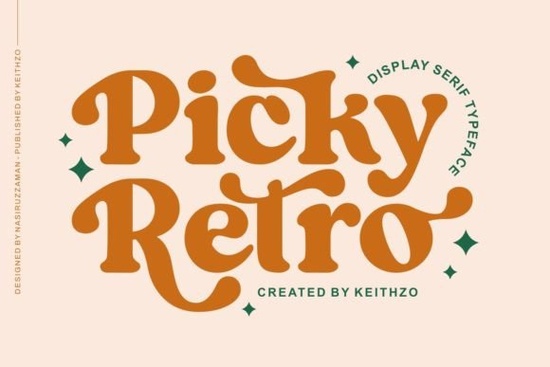
If you are looking for a typeface that balances vintage charm with strong readability, Picky Retro Font delivers exactly that. This bold display serif was built to catch the eye without feeling cluttered, making it a reliable choice for logo marks, event headlines, and print-on-demand graphics. The letterforms carry a nostalgic weight that works especially well when you want your design to feel established yet approachable. You can explore the full typeface preview to see how the glyphs render across different layouts, or find Picky Retro Font on Creative Fabrica, where it includes the standard file formats most design software expects.
What makes this typeface work for vintage-style projects?
The secret lies in how the strokes are weighted. Unlike thin scripts that disappear on textured backgrounds, this serif keeps its structure intact on materials like canvas totes or kraft labels. The curves carry a hand-drawn warmth, while the straight edges stay crisp for digital screens. That balance matters when designing for both web banners and physical products. Small business owners often notice that retro-inspired lettering builds trust because it hints at craftsmanship. Pair it with muted palettes or grain overlays, and the nostalgic feel comes through naturally without looking dated.
Where should you use a bold display serif like this?
Display typefaces are meant to be seen at larger sizes, so they shine in specific spots across your workflow. Here are the places where this style consistently performs well:
- Brand headers and shop banners that need to stand out in a crowded marketplace
- Apparel graphics where thick strokes prevent cracking or fading after multiple washes
- Wedding and party invitations that aim for a relaxed, throwback aesthetic
- Social media quote cards that require quick readability on mobile screens
Keep your body text in a clean sans serif or a lightweight transitional serif. Let the display font handle the heavy lifting at the top of the layout, and step back to check the visual hierarchy. If the headline competes with the supporting copy, reduce the size or increase the letter spacing slightly.
How does it compare to other retro or display typefaces?
Not every vintage-inspired font serves the same purpose. Some lean into distressed textures, while others focus on geometric precision. If you enjoy the chunky vibe but need a different mood, you might browse through a quirky handwritten alternative that feels more casual. For projects requiring a sporty atmosphere, a collegiate-style lettering set gives you that structured team look. When your audience skews younger, a softer, rounded display option reads friendlier on packaging. If you want a subdued aesthetic, a gentle retro companion pairs nicely alongside heavier serifs. Testing a few side by side usually reveals which one matches your brand voice.
What should you check before adding a new font to your toolkit?
Downloading a typeface is quick, but using it responsibly takes a few extra steps. First, verify the license type. Personal projects usually have fewer restrictions, but commercial work and items you sell on Etsy or Shopify require a commercial license. Second, confirm the download includes the file formats your software needs. Most programs accept .OTF or .TTF files. Third, install the font correctly and restart your design app so the new family appears in the menu. Finally, run a quick test print to check how the curves render at your intended size. Small rendering issues often show up only after export, so catching them early saves time and prevents costly reprints.
Before you start your next layout, run through this quick setup checklist to keep your workflow smooth:
- Confirm the license covers your intended use, especially for print-on-demand or client work
- Install both regular and alternate files if the package includes them
- Set your headline size between 36pt and 72pt for optimal readability
- Pair the display serif with a neutral body font to maintain clear hierarchy
- Export a test proof at 300 DPI and check edge clarity before final production
Take a few minutes to test the typeface on a mockup that matches your actual product. When the weight, spacing, and color feel balanced, you will know it is ready for your next release.
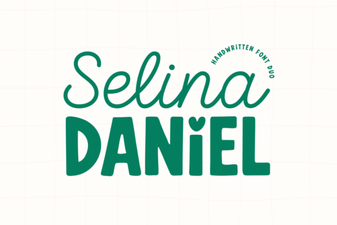 Selina Daniel: Modern Duo Font for Creative Designs
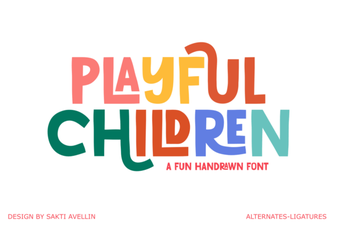 Playful Fonts for Creative Kids’ Projects
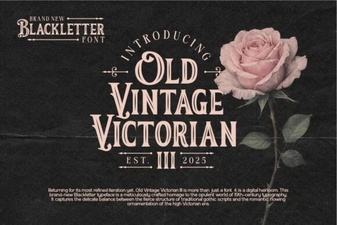 Unlock Victorian Elegance with Iii Fonts for Design
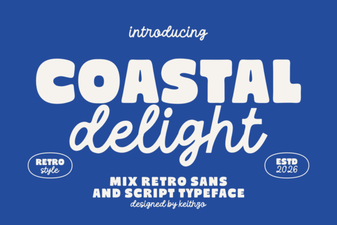 Coastal Delight: Elegant Fonts for Seaside Projects
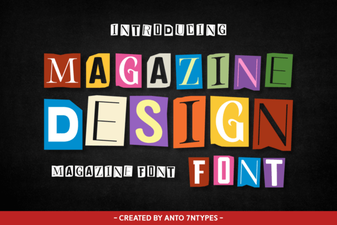 Crafting Legible Magazine Design with Modern Fonts
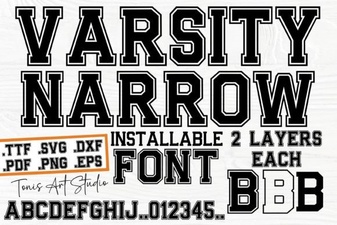 Modern Varsity Fonts for Sports & Branding Projects