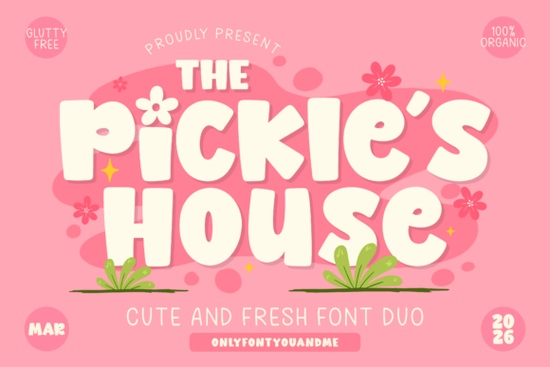
If you need a typeface that brings instant charm without losing readability, The Pickles House Font hits the right note. This two-style set pairs a chunky, rounded display face with a lighter, airy handwritten companion, letting you build balanced layouts quickly. Small business owners and crafters often choose it for organic branding and children’s products because the shapes feel warm rather than overly polished.
Why does this duo work so well together?
The primary style features soft edges and slightly uneven letterforms that mimic a hand-stamped finish. Those subtle imperfections keep the text from looking sterile, which explains its popularity among creators avoiding generic clipart aesthetics. The secondary layer introduces thinner strokes and a relaxed baseline shift, adding breathing room so compositions never feel cramped. You will notice how quickly a plain label transforms into something ready for a craft booth.
When placing these characters alongside botanical illustrations, the rounded terminals catch the eye while the lighter counterpart maintains visual calm. Designers who usually rely on rigid geometric shapes often switch to a softer alternative like Stacked Chunky when their project lacks that organic energy. The difference shows clearly in badge designs and sticker sheets.
Which projects benefit most from this style?
Garden-inspired themes respond naturally to how these letters interact with earthy palettes. Food packaging shops frequently select this family for snack wrappers because the friendly curves echo modern retail trends without slipping into cartoon territory. Social media marketers also appreciate the consistent character widths, which make resizing banners predictable across template libraries.
Compared to breezy coastal scripts, this pairing carries a distinctly grounded atmosphere. If you previously used Coastal Delight for summer campaigns, you may find this option better suited for spring planting guides. The heavier display weight handles large headlines effortlessly, while the lighter style manages subheaders without competing for attention.
What is the best way to pair it with other fonts?
Effective layouts usually require a neutral counterpoint to let the headline carry the mood. Clean sans serifs provide the quiet foundation needed for ingredient lists or pricing grids. Try matching the bold display style with a low-contrast sans for menu boards, then switch to the handwritten layer for call-to-action buttons. Stacking multiple decorative faces tends to create visual noise, so keeping one structure close by prevents clutter.
Many creators keep a narrow geometric sans handy for tight specifications. Varsity Narrow helps condense technical details without distracting from the main artwork. Brands aiming for a retro aesthetic sometimes experiment with playful alternates like Picky Retro, though those styles require careful tracking. Heritage designers aiming for an artisanal feel occasionally incorporate vintage options like Old Vintage Victorian III for secondary accents, though those styles demand careful tracking to preserve legibility.
What file details and licensing terms matter most?
Creative Fabrica typically distributes these packages as OTF, TTF, WOFF, and PNG previews, covering desktop editors and vinyl cutters. Always review the commercial license before uploading mocks to print-on-demand stores, since certain marketplaces restrict specific merchandise categories. Testing the files in your production environment catches spacing issues early, especially when exporting cut lines for machine crafting.
For straightforward guidance on embedding rules and modification permissions, refer to the official resource page for The Pickles House Font. Keeping those parameters visible during your workflow prevents accidental violations and ensures your final exports meet platform standards.
How should you prepare your workspace before producing?
- Import all formats and verify kerning pairs at 100% zoom.
- Draft three headline variations using only the bold style to establish hierarchy.
- Insert the lighter companion for subheaders to balance visual weight.
- Export a 300 DPI PDF proof and check edge smoothness before printing.
- Save a mini style sheet documenting safe backgrounds and minimum size limits.
Next step: Open your canvas, set up a simple grid, and place three sample phrases using just the display variant. Once the spacing feels steady, introduce the handwritten layer alongside one neutral sans serif. Tighten the line height by five percent, preview on a mobile screen, and adjust tracking until the pair reads cleanly at thumbnail size. A single saved preset will streamline your next batch of listings.
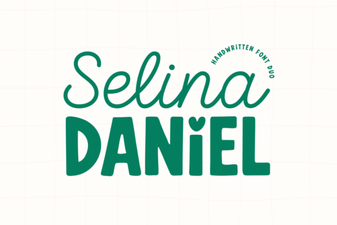 Selina Daniel: Modern Duo Font for Creative Designs
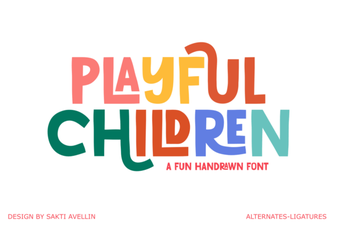 Playful Fonts for Creative Kids’ Projects
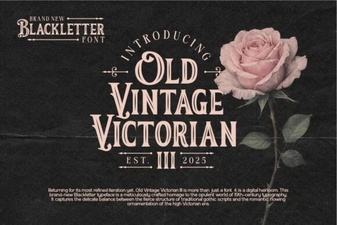 Unlock Victorian Elegance with Iii Fonts for Design
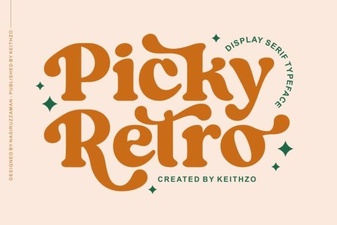 Reviving Design with Picky Retro Fonts
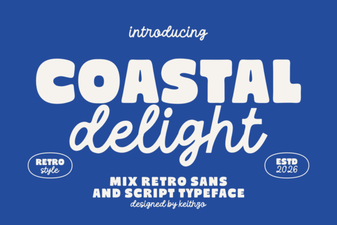 Coastal Delight: Elegant Fonts for Seaside Projects
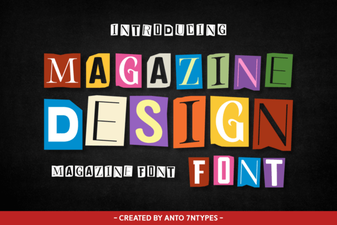 Crafting Legible Magazine Design with Modern Fonts