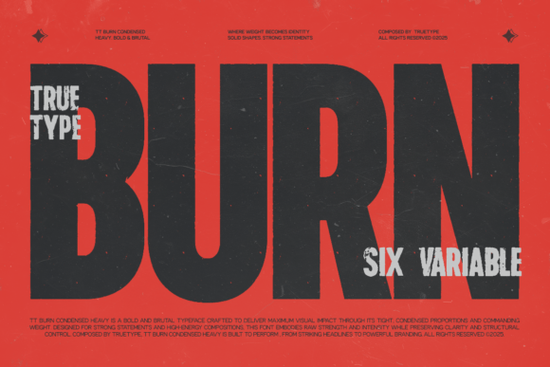
When you need to fit more words into a narrow space without sacrificing readability, TRT Burn Font gives you a clean, condensed sans serif that holds up on both screen and print. Its narrow width and tall proportions let you pack headlines, labels, and interface elements tightly while keeping each letter distinct. Designers, print-on-demand sellers, and small business owners often reach for this style when poster space is limited, packaging real estate is tight, or mobile layouts need clear hierarchy. If you are building a brand system or laying out a product catalog, this typeface delivers a steady, professional rhythm that stays legible at various sizes.
What makes a condensed sans serif useful for tight layouts?
Condensed fonts solve a simple problem: they let you say more in less space. This typeface keeps its stroke contrast balanced, so the letters do not blur together when scaled down. The vertical stress and refined geometry create a confident tone that reads clearly on merchandise tags, social media graphics, and web banners. Because the characters are built with consistent spacing, you can adjust tracking slightly for headlines without creating awkward gaps. This matters when you are designing Shopify product cards, Etsy listing images, or editorial spreads where every millimeter counts. If you usually pair bold display type with softer scripts, you might also browse handwritten styles that complement structured sans serifs to add a human touch to your layouts.
Where does this typeface work best in real projects?
The narrow footprint makes it a reliable choice for projects that demand strong visual presence without wide letterforms. You will see it perform well in:
- Branding and logos: Clean wordmarks that need to fit on business cards, storefront signs, or app icons.
- Packaging and labels: Ingredient lists, care instructions, and product names that must stay readable at small point sizes.
- Advertising and posters: Event announcements, sale banners, and promotional graphics where hierarchy matters.
- Web and UI design: Navigation menus, dashboard headers, and button text that require consistent alignment across breakpoints.
- Print-on-demand merchandise: T-shirt quotes, tote bag typography, and sticker designs that need crisp edges for screen printing or DTG.
Because the font maintains steady proportions, it scales predictably from large display sizes down to functional body text. When you need a straightforward reference for your own records, you can bookmark the full typeface overview to check file formats and licensing details before starting a client project.
How do you pair it without crowding your design?
Condensed typefaces carry a lot of visual weight, so pairing them carefully keeps your layout breathable. Start by using this font for headlines, subheads, or short callouts, then switch to a wider sans serif or a readable serif for longer paragraphs. Keep line height generous when working with narrow letters, especially in multi-line blocks. A line height of 1.4 to 1.6 usually prevents the text from feeling cramped. You can also add a subtle underline to short phrases to draw attention without adding extra decorative elements. If you want to explore how different styles interact, testing a TRT Burn Font alongside a rounded sans or a classic geometric typeface will show you how contrast improves readability. Stick to two or three type families per project to maintain a clean, professional finish.
What should you verify before adding it to your toolkit?
Not every font file works the same across design software, so a quick check saves time later. Confirm that the download includes the formats you need, such as OTF, TTF, or web-ready WOFF files. Review the commercial license if you plan to sell physical products, digital templates, or client branding packages. Some licenses cover unlimited print runs but restrict app embedding or font redistribution. Test the typeface in your actual workflow before committing. Open it in Illustrator, Canva, or Figma, type out common letter combinations like AV, TY, and rn, and check how the kerning handles caps versus lowercase. If you work with international audiences, verify that the character set supports the accents or symbols your project requires. A short test print or screen mockup will reveal how the strokes render on your preferred output method.
Choosing a condensed sans serif comes down to spacing, legibility, and consistent performance across mediums. When your layouts demand a tight footprint and a modern tone, this typeface gives you a dependable foundation. Keep this quick checklist handy before you finalize your design:
- Set tracking between -10 and +20 for headlines to avoid cramped or loose spacing.
- Use a line height of at least 1.4 for multi-line text blocks.
- Pair with a wider secondary font for body copy to improve reading flow.
- Check license terms for print-on-demand, client work, and digital product sales.
- Export a test PDF or PNG at 100% scale to verify stroke clarity before printing.
Run through these steps, adjust your spacing to match your layout, and you will have a clean, professional result that holds up across print and digital projects.
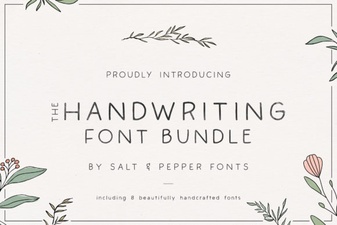 Craft with Handwriting Bundle Fonts for Digital Projects
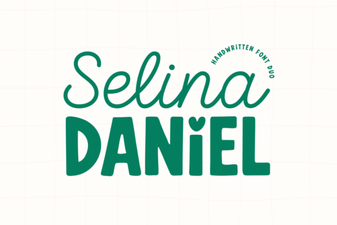 Selina Daniel: Modern Duo Font for Creative Designs
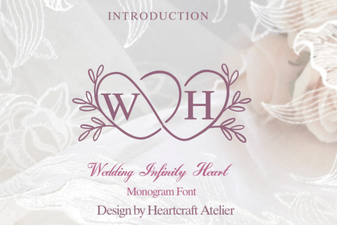 Infinity Heart Fonts for Wedding Invitation Design
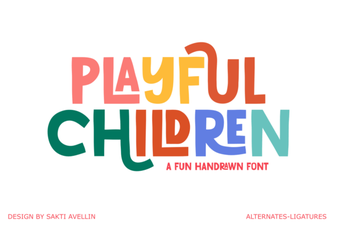 Playful Fonts for Creative Kids’ Projects
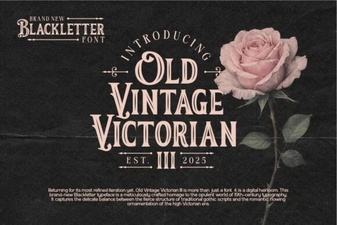 Unlock Victorian Elegance with Iii Fonts for Design
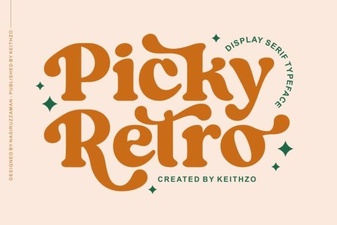 Reviving Design with Picky Retro Fonts