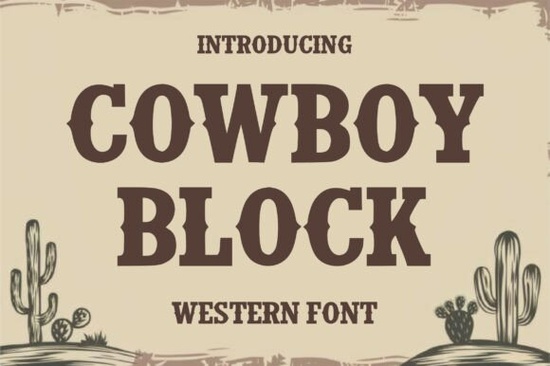
If you need a typeface that instantly reads as rugged, vintage, and unmistakably Western, the Cowboy Block Font delivers exactly that. Built as an all-caps display face, it relies on thick, condensed letterforms and sharp decorative spurs that echo old saloon signs and frontier printing presses. Designers, print-on-demand sellers, and small business owners often reach for this style when they want headlines that command attention without feeling cartoonish. It works best at larger sizes where those block serifs and wedge details stay crisp and legible.
What makes this Western typeface stand out?
The strength of this lettering comes from its deliberate restraint. Instead of adding grunge textures or exaggerated swirls, it keeps the shapes clean and geometric while letting the serifs do the heavy lifting. Those small wedge-like extensions give each character a hand-carved quality that reads well on both screen and print. Because the weight is heavy and the width is slightly condensed, you can fit longer phrases into tight spaces without losing impact. If you usually browse through retro-inspired display options for branding projects, you will notice how this one leans more toward authentic frontier signage than mid-century diner aesthetics.
Where does it work best in real projects?
This style is not meant for body copy or small captions. It thrives in applications where you need instant visual hierarchy and a clear thematic direction. Crafters and POD sellers often use it for:
- Apparel graphics that feature bold chest prints or back designs for outdoor brands
- Restaurant and bar signage where readability from a distance matters more than delicate details
- Event posters and album covers that need a straightforward, masculine edge
- Labels and packaging for small-batch goods like hot sauce, coffee, or leather accessories
When you are building a collection of typefaces for seasonal drops, it helps to keep a few versatile display faces on hand. Many creators pair this with athletic or collegiate lettering styles when they want to shift from rustic to varsity without losing that heavy, structured feel.
How to pair it with other lettering styles
Since this font only includes uppercase characters, you will need a reliable secondary typeface for subheadings, descriptions, and contact information. A clean sans serif or a simple slab serif usually works best because it steps back and lets the Western headlines take center stage. If you prefer something with a bit more personality, you might test it alongside modern vintage display options that share similar proportions but offer lowercase support. For projects aimed at younger audiences or family-friendly events, some designers balance the rugged tone by adding playful display lettering in smaller accents or decorative badges.
What should you watch out for when using it?
Heavy display fonts can quickly overwhelm a layout if you are not careful with spacing and contrast. Keep these practical points in mind before sending files to print or uploading them to a marketplace:
- Track it out slightly. Tight letter spacing works for short words, but longer phrases benefit from a little extra breathing room.
- Avoid busy backgrounds. The decorative spurs need clean negative space to remain readable at a glance.
- Test at actual size. What looks sharp on a 27-inch monitor can lose detail on a 12x18 poster or a woven shirt tag.
- Check licensing terms. Commercial use, especially for print-on-demand and merchandise, requires the proper license file.
If you often rotate through thematic typefaces for client work, you might also explore nostalgic display families that offer alternate weights or stylistic sets for more layout flexibility.
You can preview the full character set and licensing details for Cowboy Block Font directly on the marketplace before adding it to your toolkit.
Quick next steps before you design:
- Download the font files and install them on your system
- Set up a test document at your final print or export dimensions
- Type your longest headline and adjust tracking until the serifs stay clear
- Pair it with a simple secondary font for body text and contact details
- Export a low-res proof and check readability on a phone screen
Keep your layout clean, let the heavy letterforms do the talking, and you will get that authentic frontier look without overcomplicating the design.
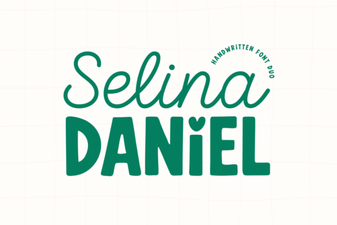 Selina Daniel: Modern Duo Font for Creative Designs
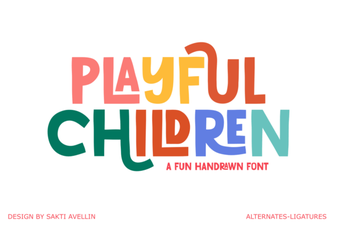 Playful Fonts for Creative Kids’ Projects
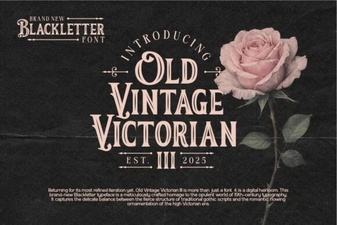 Unlock Victorian Elegance with Iii Fonts for Design
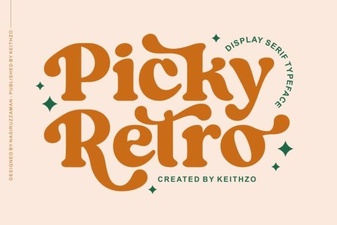 Reviving Design with Picky Retro Fonts
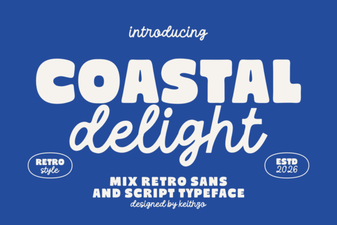 Coastal Delight: Elegant Fonts for Seaside Projects
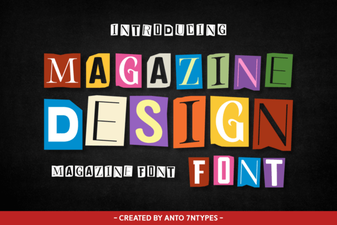 Crafting Legible Magazine Design with Modern Fonts