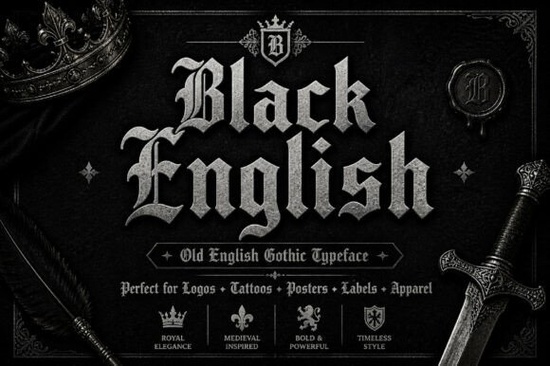
If you need a typeface that carries weight, history, and a clear vintage presence, the Black English Font delivers exactly that. It blends traditional blackletter structure with sharper calligraphic edges, giving you a gothic style that reads clearly even at smaller sizes. Designers, print-on-demand sellers, and small business owners often turn to this kind of old english typography when they want a project to feel established, bold, or slightly mysterious without relying on heavy graphics.
What makes this blackletter style different from standard gothic fonts?
Many decorative typefaces lean too heavily into ornate details, which can blur together on screen or print poorly on fabric. This design keeps the historical feel but cleans up the stroke contrast so the letters stay legible. You get the dramatic flair of medieval manuscript lettering, but with modern spacing and consistent baseline alignment. That means fewer manual kerning adjustments and a faster workflow when you are setting headlines or short phrases.
Here is what stands out during everyday use:
- Balanced weight distribution that prevents ink bleed on dark apparel
- Clear character distinction between similar letters like I, l, and J
- Built-in alternates that let you swap rigid terminals for smoother curves
- Consistent x-height that keeps multi-line text readable
Where does a heavy old english typeface work best?
This style thrives in projects that need instant visual authority. Think band merch, vintage-style packaging, craft brewery labels, or tattoo-inspired wall art. Because the letterforms carry so much personality, you only need a few words to make an impact. Print-on-demand sellers often use it for short quotes or brand names on t-shirts and tote bags, while small businesses apply it to window decals and event posters. If you are browsing other dark medieval typefaces for a themed collection, this one slots in nicely alongside simpler sans-serif supporters.
How do you pair and format dramatic typography without overwhelming a layout?
Heavy gothic letters demand breathing room. The easiest approach is to treat this font as your primary accent and pair it with a clean, neutral sans-serif for body copy or subheadings. Keep line spacing generous, especially when stacking words vertically. When working with dark backgrounds, reverse the color scheme to light text on dark fabric or paper, and always run a test print. Decorative fonts can look sharp on a monitor but lose detail on cotton or textured cardstock. A quick mockup saves time and prevents muddy results. You can preview how the Black English Font renders across different materials before committing to a final layout.
What should you check before downloading a decorative font for commercial projects?
Licensing and file compatibility matter just as much as aesthetics. Most creative marketplaces offer desktop, web, and commercial licenses, but the exact terms vary by creator. Always verify whether your intended use covers print-on-demand sales, digital products, or client branding. Check that the download includes both OTF and TTF files, since some cutting machines and design programs prefer one format over the other. If you plan to use the typeface in Cricut Design Space or Silhouette Studio, install it to your system fonts first, then restart the software so the new characters appear correctly.
Before you start your next design, run through this quick setup list:
- Confirm the license covers your specific sales channel or client work
- Install both OTF and TTF versions to avoid missing glyphs
- Test print a single line on your actual material at full scale
- Pair the blackletter style with a lightweight supporting font
- Save a flattened PDF and an editable source file for future revisions
Pick a short phrase, set it in uppercase, adjust the tracking slightly, and see how the historical weight transforms your layout.
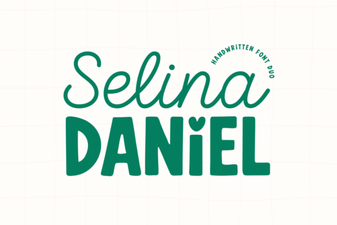 Selina Daniel: Modern Duo Font for Creative Designs
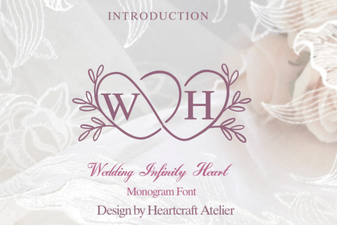 Infinity Heart Fonts for Wedding Invitation Design
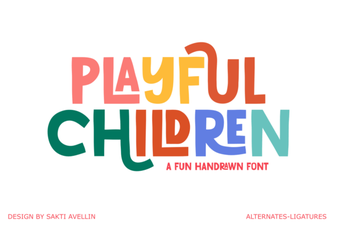 Playful Fonts for Creative Kids’ Projects
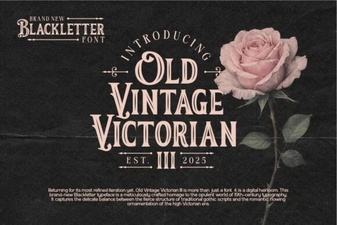 Unlock Victorian Elegance with Iii Fonts for Design
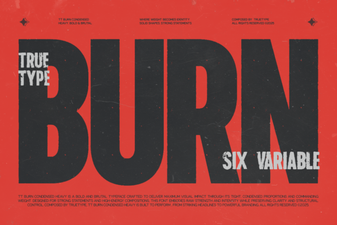 Trt Burn Font for Bold, Creative Design Projects
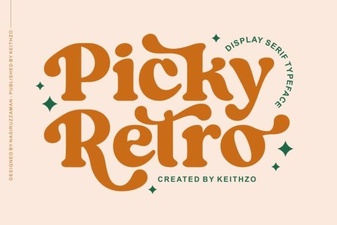 Reviving Design with Picky Retro Fonts